If you’re in your 40s or early 50s and wondering why your body suddenly feels different, you’re not alone.
Many women notice aching joints, reduced strength, stubborn injuries, poor sleep, or stiffness long before menopause officially begins. These physical changes often start during perimenopause, when hormone levels begin to fluctuate.
As a physiotherapist at Momentum Physiotherapy in Maple Ridge—and someone experiencing perimenopause myself—I see these changes every day, both professionally and personally.
While I don’t provide hormone therapy or menopause medical care, I help women manage the physical effects of perimenopause through movement, strength, education, and physiotherapy.
Tip 1: Make Strength Training Non-Negotiable
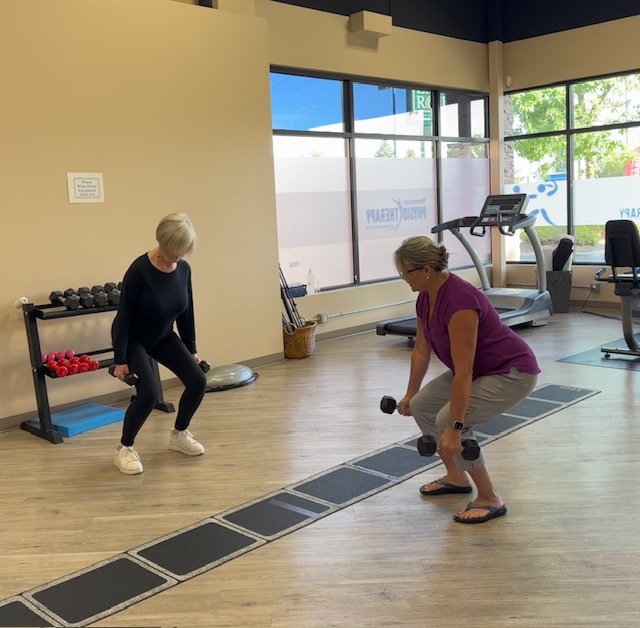
I tell my patients this, and I also live it: declining estrogen speeds up muscle and bone loss, which is why so many of us notice new joint stiffness, weaker grip, or achy knees during this transition. Resistance training two to three times a week is one of the most powerful tools we have — it protects bone density, preserves muscle, and keeps joints supported. If you’re not sure where to start, this is exactly where I can help, especially if you’re managing an old injury or joint pain alongside everything else.
Tip 2: Understand Why Muscle Loss Happens during Perimenopause
Between ages 40 and 60, most of us lose roughly 3-8% of our muscle mass per decade, and that rate speeds up as estrogen — which plays a direct role in muscle repair — starts to decline. It’s called sarcopenia, and it’s why everyday tasks like carrying groceries or getting up off the floor can start to feel harder, even when nothing else about your routine has changed. I felt this shift myself before I could put a name to it.
The good news: muscle is trainable at any age. Resistance training paired with enough protein is the most effective way to slow or reverse this loss, and building that plan is exactly the kind of thing I do with patients every day.
Tip 3: Protect Your Joints Through Smart Movement
Joint pain and stiffness are among the most under-discussed symptoms of perimenopause in Maple Ridge, partly because estrogen plays a role in joint lubrication and tissue health.
If your joints are talking to you more than they used to, I can help you figure out whether it’s a movement pattern, a muscle imbalance, or a loading issue — and build a plan around it rather than just pushing through pain.
Tip 4: Prioritize Sleep – Your Body Repairs Itself There
Night sweats and hormonal shifts disrupt sleep for a lot of us, and poor sleep makes pain, recovery, and mood all harder to manage. A cool bedroom, a consistent wind-down routine, and limiting alcohol in the evening all help.
If pain specifically is what’s keeping you up at night, that’s something we can address directly together.
Tip 5: Build Your Care Team Early
You don’t need to wait until symptoms are disruptive to get support.
For the hormone side of things, a family doctor or menopause-literate gynecologist is going to be your best resource — that’s not my lane, and I’ll always point you there when it makes sense. But for strength, mobility, and staying ahead of the physical changes this stage brings, that’s where I come in. Building that team early, rather than reacting once something becomes a bigger problem, makes this whole transition easier.
Please call us at 604-459-2223 and we can set up a time to start working on a weights program that’s sustainable, fun, and will help you navigate these years while being fit and strong!