
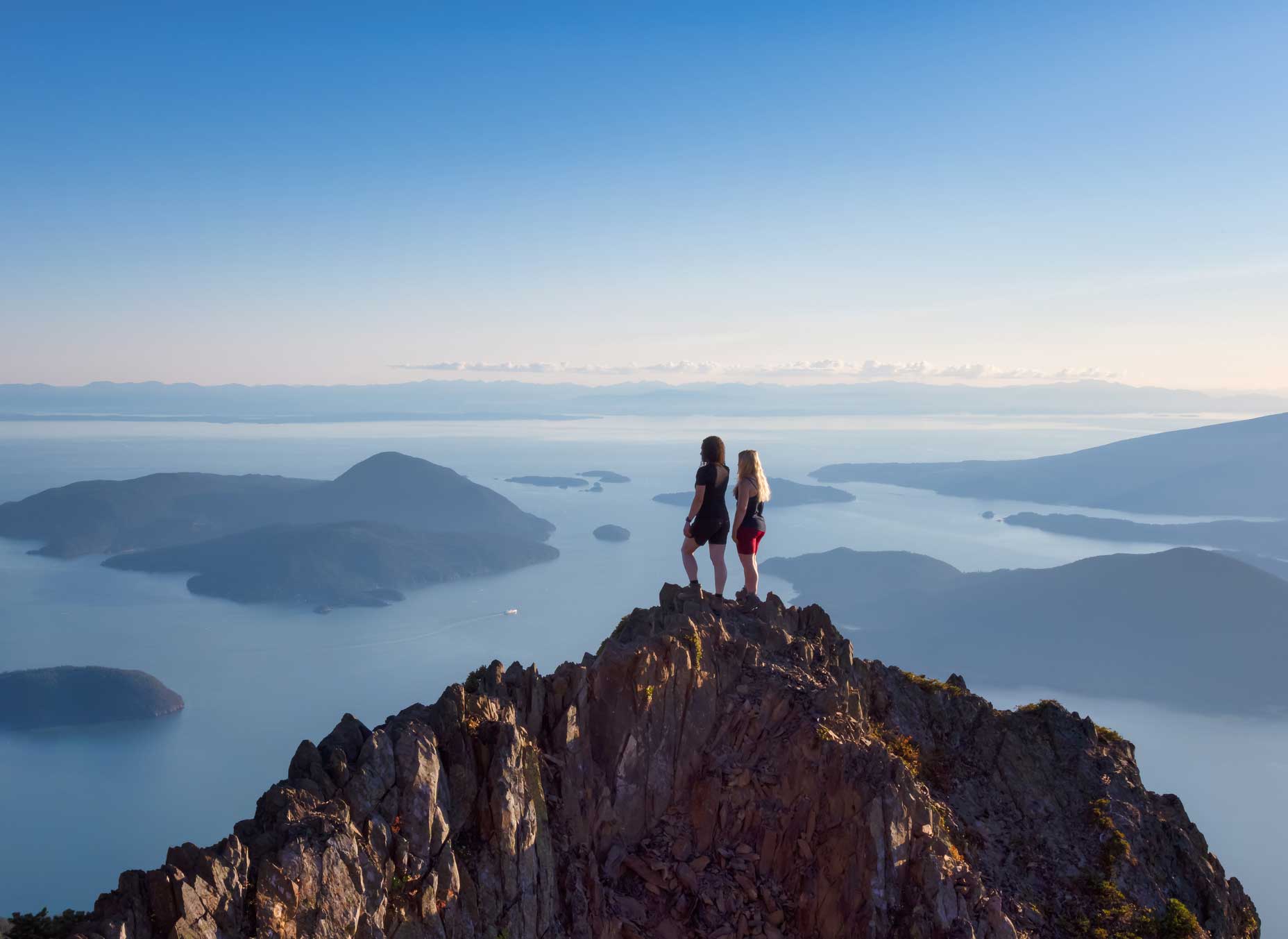
Summer hiking in British Columbia is one of the best ways to stay active, explore the outdoors and enjoy the trails around Maple Ridge and the Fraser Valley. But long climbs, steep descents, uneven terrain and hot weather can also put extra stress on your body.
As a physiotherapist — and a longtime distance runner — I see how important it is to prepare your body for the demands of the activity you want to enjoy.
Whether you’re heading out for a short local hike or tackling a longer mountain trail, a little preparation can help reduce your risk of injury and make the hike much more enjoyable.
Here are some of my top hiking injury prevention tips for summer.
Prepare Your Legs Before You Hit the Trails
Southwestern BC hiking often has a familiar pattern: a climb for the first half of the hike followed by a long, sometimes challenging descent.
Your body needs to be prepared for both.
Cardiovascular fitness will help you handle sustained climbs, but strength, balance and control become particularly important when you’re heading downhill.
Exercises to prepare for hiking
Adding a few simple exercises to your routine can help prepare your legs for the demands of uneven and hilly terrain:
- Squats to build lower-body strength
- Lunges to improve leg strength and stability
- Step-ups to prepare for climbing
- Single-leg balance exercises to improve stability on uneven ground
- Controlled step-downs to prepare your quadriceps for descents
Strong quadriceps are particularly important when hiking downhill. If your legs aren’t accustomed to the workload, you may notice sore knees after hiking, especially on long or steep descents.
Good balance and lower-body control can also reduce your risk of losing your footing on uneven terrain.
If you’re planning a demanding hike, start preparing several weeks beforehand rather than trying to build your fitness on the trail.
Start Early to Beat the Heat
Summer temperatures can make a hike considerably more demanding.
Whenever possible, start your hike early in the morning to avoid the hottest part of the day. Check the weather forecast before leaving and be aware of heat warnings, thunderstorms and wildfire conditions.
When choosing a trail on a hot day, look for routes with:
- Plenty of shade
- Access to water
- Less exposure to direct sun
- Options to turn around if conditions become difficult
And always tell someone where you’re going and when you expect to return, particularly if you’re hiking alone.
Hydration Matters
Dehydration can affect your energy, concentration and physical performance — and those effects become especially important when you’re navigating steep or uneven terrain.
Bring more water than you think you’ll need, particularly on longer hikes or hot days.
A general starting point is approximately 0.5–1 litre of fluid per hour, although your needs will vary depending on temperature, exertion, body size and the length and difficulty of the hike.
Drink regularly rather than waiting until you’re extremely thirsty.
For longer hikes or particularly hot conditions, electrolytes may also be useful.
Wear the Right Clothing and Sun Protection
Dress for the conditions and remember that mountain weather can change quickly.
Consider:
- Lightweight, moisture-wicking clothing
- A wide-brimmed hat or other sun protection
- UV-protective sunglasses
- Broad-spectrum SPF 30+ sunscreen
- Lip balm with SPF
- A lightweight rain jacket
Even on a warm summer morning, conditions can change quickly in the mountains.
Don’t Forget to Eat
Long hikes require fuel.
Pack easy-to-carry, high-energy foods such as:
- Trail mix and nuts
- Fruit
- Energy bars
- Sandwiches
- Other carbohydrate-rich snacks
Rather than waiting until you’re exhausted or extremely hungry, eat smaller amounts regularly throughout a longer hike.
Know the Signs of Heat-Related Illness
It’s important to recognize the difference between normal fatigue and signs that you may be becoming dangerously overheated.
Heat exhaustion can include:
- Heavy sweating
- Dizziness
- Headache
- Nausea
- Weakness
- Fatigue
Heat stroke is much more serious and can involve confusion, altered consciousness or loss of consciousness and a very high body temperature. Heat stroke is a medical emergency.
If you or someone you’re hiking with develops concerning symptoms, get them out of the heat and seek emergency medical assistance.
Protect Your Knees and Ankles on the Descent
For many hikers, the downhill portion is harder on the body than the climb.
Descending puts significant demands on the muscles around your knees, hips and ankles. Fatigue can also affect your balance and coordination, increasing the risk of a trip or fall.
Slow down when necessary and don’t be afraid to use walking poles. Poles can provide additional balance and stability, particularly on steep or uneven descents.
If you regularly experience knee pain when hiking downhill, don’t simply assume it’s something you have to live with. Persistent or recurring pain can be a sign that your strength, mobility, movement mechanics or hiking load need to be addressed.
Choose Appropriate Footwear
Your footwear should match the trail.
For well-maintained trails, trail-running shoes may be appropriate. For rougher, steeper or more technical terrain, hiking boots with appropriate traction and ankle support may be a better choice.
Whatever you choose, make sure your footwear is comfortable and well broken-in before taking it on a long hike.
Pack the Essentials
Even a short hike deserves some basic preparation.
Your summer hiking kit should include:
- Plenty of water
- Electrolytes for longer or hotter hikes
- High-energy snacks
- Sunscreen and SPF lip balm
- Hat and sunglasses
- Basic first-aid supplies
- Fully charged phone and portable charger
- Downloaded offline maps or GPS
- Rain jacket
- Appropriate hiking footwear
- Walking poles if useful for balance and descents
An app such as AllTrails can be useful for route planning, but don’t rely exclusively on your phone. Download maps before heading into areas with limited cell service.
What If Hiking Causes Pain?
A little muscle fatigue after an unusually challenging hike can be normal. Persistent or recurring pain isn’t something you necessarily need to push through.
Common hiking-related problems include:
- Knee pain
- Achilles or calf pain
- Ankle injuries
- Hip pain
- Plantar foot pain
- Lower-back pain
- Muscle strains
- Falls and balance-related injuries
If pain is changing the way you walk, limiting your activities or repeatedly returning every time you hike, a physiotherapy assessment can help identify what’s contributing to the problem.
At Momentum Physiotherapy & Sports Injury Clinic in Maple Ridge, we work with active people who want to recover from injury, improve their strength and movement, and get back to the activities they enjoy.
Get Your Body Ready for Your Next Hike
The best way to enjoy summer hiking is to prepare for the demands of the trail before you get there.
Build your cardiovascular fitness, strengthen your legs, work on balance, choose appropriate footwear, stay hydrated and respect the heat.
And if you’re experiencing knee pain, ankle pain or another injury that’s keeping you from hiking, don’t wait until the end of hiking season to address it.
Want to get back on the trails? The physiotherapists at Momentum Physiotherapy in Maple Ridge can help you build a plan to improve strength, movement and function so you can get back to the activities you enjoy.
Book an appointment at Momentum Physiotherapy in Maple Ridge by calling 604 459 2223 to get started!